
Understand Addiction Recovery
May 5, 2026
This post provides an overview of addiction recovery if you find yourself struggling with one or more addictions during your life. As I described during earlier posts regarding my recovery from Family Trauma Syndrome, I had to face and learn to recover from alcoholism, cigarette smoking, and food addiction. In a separate series of posts later, I will describe step by step what I have learned about addiction recovery and I had the privilege of working with many people during my career who were at differing stages of their recoveries. Even if you don’t struggle with addiction yourself, it is highly likely that you will encounter someone in your life who faces the challenge of recovery. This may be a parent, spouse, child, friend or colleague. This information will inform you about what they are going through, and in the next post, I discuss how to be helpful vs. enabling to those you encounter who are in the midst of challenge of addiction recovery.
My name is Lane Lasater, a retired clinical psychologist. In gratitude for the life I have been given, I am sharing everything I learned during my career and personal life on my website https://www.LaneLasater.com and on my YouTube Channel Life Roadmaps from a Retired Psychologist https://www.youtube.com/@lane205
Each post contains my written material, an AI generated graphic, a 15-17 minute audio summary, and a 5-7 minute video summarizing the material.
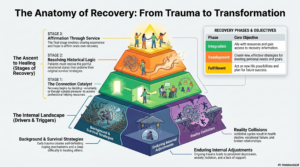
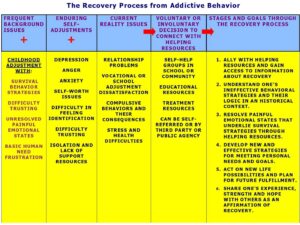
Below I explain the elements of the recovery graphic above.
- Frequent Background Issues: As discussed in my previous post on the Dynamics of Addiction, many, but not all, people who become addicted experienced troubled family or community environments which I describe in depth in my earlier series of posts titled Transcending Family Trauma. These result in self-defeating coping strategies including survival behavioral strategies, difficulty in trusting self and others, unresolved trauma and accompanying painful emotional states, and frustration of basic human needs.
- Enduring Self Adjustments: Common challenges for people who have experienced ongoing traumatic events are depression, anger, anxiety, self-worth issues, difficulty in feeling identification, difficulty trusting, feeling isolated, and lacking support resources.
- Current Reality Issues: As an addiction progresses, it curtails the person’s ability to face and solve current life challenges, and creates new problems in two ways: a) by not doing the things one needs to do such as maintaining a healthy lifestyle and meeting family and job responsibilities; and b) by doing things that are not in one’s best interests like excessive spending, taking legal risks, placing oneself in unsafe or compromising situations, lying, etc. Thus, for each cycle of addictive behavior, the individual emerges with his/her previous reality challenges unchanged, plus the additional consequences that emerge from unhealthy choices including relationship problems, vocational or school adjustment and dissatisfaction, reduced self-worth, and stress and health difficulties.
- Voluntary or Involuntary Decision to Connect with Helping Resources: Recovery may begin by the individual’s recognition that their addictive behavior and consequences are progressing, and they feel unable to stop on their own, or the individual encounters outside forces that challenge continuing the addictive behavior, such as an ultimatum from a significant other or parent, confrontation at the workplace because of decreased performance, or legal consequences and accountability such as being arrested for DUI, drug possession, etc. Regardless of whether the individual made a voluntary or involuntary decision to connect with helping resources, his/her depth of commitment to that decision determines whether they will follow through on the challenging and difficult stages on goals through the recovery process outlined below. Many people unfortunately endure repeated cycles of partial decision to change which leads to failure before they finally make a deeply rooted decision to do whatever it takes to recover.
- Stages and Goals Through the Recovery Process:
- Ally with helping resources and gain access to information about recovery.
- Understand one’s ineffective behavioral strategies and their logic in an historical context.
- Resolve painful emotional states that underlie childhood survival strategies with the aid of helping resources.
- Develop new and effective strategies for meeting personal needs and goals.
- Act on new life possibilities and plan for future fulfillment.
- Share one’s experience, strength and hope with others as an affirmation of recovery.