
Purposeful Parenting Handbook
February 8, 2026
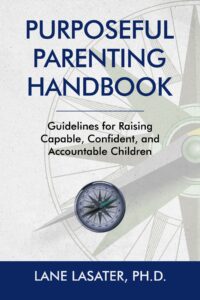
This post introduces a series of posts that are drawn directly from my book entitled: Purposeful Parenting Handbook: Guidelines for Raising Capable, Confident, and Accountable Children. This series provides foundational guidance for parenting very young children and toddlers, but its main focus is on creating a constructive family environment for school age children and teenagers as they prepare for independence.
The Joys and Suffering of Parenting
Raising children is sometimes wonderful and sometimes painful. I’ve experienced both, and you may have also. If family members all get along, like each other, have fun together, and leave for work or school in the morning feeling good, our family is a wonderful resource.
But when people are mad at home, family members don’t feel cared about, and challenges build up, we may leave home in the morning feeling like there’s a black hole inside. Then our family can be a burden that threatens to sink us. That’s the bad news. The good news is we don’t have to reinvent the parenting wheel when we make use of powerful and field-tested information and strategies to be more effective parents.
My name is Lane Lasater, a retired clinical psychologist. In gratitude for the life I have been given, I am sharing everything I learned during my career and personal life on my website http://www.LaneLasater.com and on my YouTube Channel Life Roadmaps from a Retired Psychologist https://www.youtube.com/@lane205 Each post contains my written material, an AI generated graphic, a 15-17 minute audio summary, and a 5-7 minute video summarizing the material.
My objective throughout my career was to understand and promote child, adolescent, adult, and family well-being, and to help people recover individual and family wellness when they become sidetracked through life events. This series offers you practical options for navigating the common parenting opportunities and challenges most of us will face. There is already a wealth of excellent parenting guidance available, and I will point you toward valuable information for expanding your parent education.
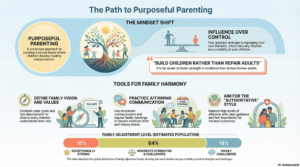
“It’s easier to build strong children than to repair broken men.” (and women—Author’s addition)
Frederick Douglas
Parenting in a Complex World
Modern families come in all shapes and sizes. This handbook focuses on parenting challenges for families with one or more parenting adults, and one or more school age children or young adults living together. Adults providing parenting may be parents, grandparents, foster parents, Uncles or Aunts, or guardians. When I use the terms “Parents” or “Parenting” in this handbook, I mean everyone who has responsibility for raising children or teenagers and supporting young adults. I use the words “son or daughter, children and teenagers” to include biological children, adopted children, foster children, or grandchildren who are in school but still living with adults.
Every family today faces challenges related to the dramatically changing world we live in–including financial insecurity, family conflicts, children struggling in school, relationship challenges and divorce, health or mental health concerns, drug or alcohol use by either a parent or child in the family, raising children in a step-family, and death or disability of a family member. Everyone faces some of these challenges sooner or later.
Depending on the details of your family situation, just use what fits for you from this handbook and put it to work. When you do your best using empowering parenting information, you can make things better in your family, no matter what other family members do. If you run into a setback, keep trying and don’t give up. Millions of families are making it through hardships of every variety. You can too.
When we create a family environment that provides security, support, guidance and affection, each family member has the foundation for creating the life he or she desires. What is the essence of parenting? You do everything in your power to create or restore a home environment where all family members live together in relative harmony, solve life challenges, and young people develop healthy independence and self-direction. When your family achieves this, it has a profound positive effect on everyone.
Why do many families struggle to create family emotional stability and security? We know that family troubles can pass from generation to generation when children adapt to the limitations of their parents, and then as adults unknowingly convey those or other limitations to their own children.
Relatively few families are either totally challenged or completely strong. If we imagine family adjustment in a normal bell-shaped distribution, the midpoint represents families with moderate strengths and moderate challenges. About 64 percent of families might fall into this middle range. Approximately 18 percent of families would be assumed to be very challenged, and approximately 18 percent would be expected to have exceptional strength.
There are many excellent parenting books out there. The book I found most helpful during our parenting journey was Parenting with Love and Logic by Jim Fay: https://www.amazon.com/Parenting-Love-Logic-Teaching-Responsibility-ebook/dp/B07T6C3R2Y/.
My focus in this handbook is to provide practical parenting guidelines to supplement what you already know, allowing you to blend these guidelines with other approaches you are familiar with.
Guidelines for Purposeful Parenting
This handbook offers 22 guidelines for purposeful parenting listed below. Each guideline is a down-to-earth approach or tool you can use as you create a clear system for family management, develop a secure home base for everyone, and shepherd your children toward becoming happy and productive world citizens.
- Adopt Public Health Wisdom
- Practice “Authoritative Parenting”
- Carry Out Best Parenting Tasks from Long-Term Studies
- Define Your Family Vision and Values
- Trust Your Children
- Hold Regular Family Meetings
- Practice Affirming Family Communication
- Avoid Destructive Family Communication
- Suggestions for Family Decision-Making
- Resolve Conflicts Fairly
- Define Family Job Descriptions
- Control You and Influence Your Children
- Help Each Child Build a Life Foundation
- Face Major Family Challenges Directly
- Understand the Stages of Behavior Change
- Create a Family Development Plan
- Utilize Situation Analysis
- Learn Rational Problem Solving
- Handle Grief and Loss
- Use Influence Effectively
- Balance Family Power and Responsibility
- Maintain Family Well-Being Through the Ups and Downs of Life
How I Developed these Guidelines
My parents were cattle ranchers in Colorado. They were wonderful people who taught us everything they knew and each gave us wonderful gifts. Tragically, they could never resolve their terrible marital conflicts, with catastrophic impact for them and for me and my siblings.
I recognized in hindsight that I tried to counsel them as a little boy, but I was never able to stop their arguments. My painful family experiences shaped my deep interest in psychology, and a central objective for me as I sought to create a family was to have a home that could be a stable sanctuary for us all.
I’ve been privileged to study parenting from multiple personal and professional perspectives—as a young adult recovering from challenging childhood events, during professional training, then during my 45 years working in mental health, including 35 years as a practicing clinical psychologist.
I developed many of these guidelines as I worked with troubled couples and families and we used each of these approaches while co-parenting our two sons with my life partner Nancy Larson. They are each now men we admire and treasure.
Throughout my career, I’ve worked with hundreds of struggling children and families, and with adults coming to terms with the parenting they received while growing up. After many years of practice, I became Program Director for an agency serving youth, adults and parents on probation and parole.
Working in corrections ultimately led me to work to prevent young people from entering the criminal justice system by creating school character development curricula to reduce school dropouts. I then trained over 1,200 teachers and other professionals who taught these classes to over 60,000 grade school, middle school and high school students as well as many parents, teaching participants how to solve the life challenges they faced.
Each parenting guideline addresses one critical dimension of the parenting journey. My most difficult parenting experiences happened when I either hadn’t yet identified these strategies or unwittingly ignored them. This set me up for painful lessons. In parenting, as with credit cards, it’s pay now or pay later with 25% interest.
As I describe these guidelines, I offer case examples and exercises to complete so you can better understand each guideline and put it to use in your family.
Self-Control and Purposeful Parenting are Our Most Important Tools.
Parenting challenges can start subtly and sneak up on us. We may drift into ineffective parenting patterns and emotions that we don’t know how to change, particularly when we’re preoccupied with challenges such job stress, family conflict, divorce, addiction, financial challenges, parental affairs, depression or anxiety, or child behavior problems. It’s easy to get discouraged.
For many of us, me included, some parenting challenges originated from our growing up years as we adapted to the strengths and limitations of our childhood families. Each child we raise also brings his/her unique personality, temperament, strengths and limitations, and choices. And, young people today face dangers and difficulties we never dreamed of. We’re all tempted to try to control our school age child’s or teenager’s choices, but over-controlling a child almost always backfires.
One idea I ask you to consider through this handbook is that as a parent, the greatest control we have is over ourself and our parenting choices. Ironically, taking full responsibility for our behavior has the biggest positive influence on other family members. The handbook is designed to help you focus on your choices and behavior within the framework of the responsibilities and rules you clearly define for every family member. This encourages the children you care for to assume responsibility for their choices and behavior, both positive and negative. Using self-control is a powerful tool to use throughout the enterprise of raising responsible children.
The handbook asks you set to parenting goals and objectives, plan for meeting everyone’s needs, and create a positive family environment. Purposeful parenting also requires recognizing and changing ineffective strategies, and finding new, constructive approaches. No matter what, you can master the parenting challenges you face and resolve the powerful emotions that underlie them. When you recognize and change unproductive parenting strategies it helps everyone in the family toward greater satisfaction and success.
The Benefits of Purposeful Parenting
There are many aspects to my loving relationship with my life partner Nancy and our now grown sons, but here are a few qualities of parenting experiences that I treasure.
- enjoying our days together, laughing a lot, and crying sometimes
- setting individual and family personal and professional goals and supporting each other to achieve them
- sharing our love of the outdoors in hiking, skiing, backpacking, bird watching, and kayaking
- supporting our sons endeavors in the world
- growing spiritually in parallel
- sharing friendships with other families and individuals
- negotiating the difficulties of life and supporting each other through disappointments and victories.
As you consider your life and the family you want to create. I wish all these things and more for you on your family journey!
What the handbook offers.
All the time you invest in parenting education, homework, and preparation pays off richly, and helps you bypass potentially costly and painful parenting mistakes. You don’t have to wait until child challenges become severe to make family adjustments. The sooner you recognize an unproductive parenting pattern, the better. No matter how difficult things become, the important thing is deciding to change things for the better. It all comes down to the choices you make today. Through the handbook I offer you many concepts and parenting skills to consider, including:
- Defining your ultimate family goals so you can always re-focus on the big picture.
- Offering you effective “how to” parenting wisdom I have used both personally and professionally.
- Providing practical exercises to assess your specific parenting strengths and challenges so you can adjust for these as needed.
- Providing instructions for effective family communication that reduce family conflict and help you arrive at fair and lasting solutions to family challenges.
- Instructing you on how to develop a family agreement that spells out each family member’s responsibilities as well as the benefits and rules for family life.
- Specific parent coping strategies to use when you encounter emotional and behavioral family setbacks and challenges.
- Tools to help you change your parenting choices and behavior and make things better when problems come up that need correcting.
How to Use This Parenting Handbook
I present the guidelines one at a time, and each stands alone as well as in concert with all the others. Here’s how to get the most out of this handbook.
- These guidelines serve as daily parenting reminders to follow, and provide useful re-orienting landmarks when we need to regain our bearings or become embroiled or overwhelmed during the day-to-day effort of meeting our responsibilities and launching children into the world.
- Work through the handbook with your parenting partner(s) so that everyone influencing your children can act in alignment.
- Respect your personal learning style and intuition about what information fits best for you.
- Get the big picture. Review the entire handbook to understand the essential steps to effective parenting. Knowing the lay of the land, like a roadmap, helps when you get into unfamiliar territory.
- Record your answers for each parenting reflection or exercise in a parenting journal. You can use a notebook or notes application.
- Discuss what you read, and review your exercises with your co-parent, other trusted family members or advisors. If they’re open to it, ask them to complete the exercises themselves for comparison and discussion. If needed, find a family therapist to get the benefit of more support and dialogue.
- Keep at it. A one- or two-step approach won’t work. There’s no quick and easy path to developing and implementing your parenting plan. But if you put in the effort, every step counts. Work day-by-day to move forward steadily on your path to launching responsible and self-directed children into the world.
Best wishes on your parenting journey!
Disclaimer
This website is designed to give you information to help you be successful in your life decisions and relationships. The information and suggestions provided are for the reader’s education and consideration only. Providing information and practical tools to you about personal and relationship challenges and solutions does not constitute the practice of psychotherapy or medicine. Lane Lasater, Ph.D. has taken care to alert you to serious warning signs and encourage you to seek licensed professional help when indicated. The information provided here is not a substitute for assessment, diagnosis and treatment of any mental disorder and cannot substitute for the services of a mental health care professional or physician. It is intended for instructional purposes only. The use of this information is solely at your own risk.
Trigger and Content Warning: Please be aware that the website includes descriptions of trauma, PTSD, child abuse, alcoholism, family violence, drug addiction, sexual addiction, compulsive behavior patterns including overeating, bulimia, sexual abuse, depression, disability, divorce, anger, sex, and terminal illness which could disturb or trigger upsetting memories for certain readers.
Lane Lasater, Ph.D. shall have no liability for claims by, or damages of any kind to, a user of this information. Such damages include, without limitation, damages for personal injuries, emotional distress, and other non-monetary loss, as well as direct or indirect damages. I have made all reasonable efforts to include accurate information to you but make no warranties or representations as to its accuracy, completeness, or timeliness. Lane Lasater, Ph.D. assumes no liability or responsibility for any errors or omissions in the content of this written and electronic work. To the full extent permitted by law, we disclaim all warranties, express or implied. By using the information on this website, you are agreeing to the provisions of this disclaimer, and you waive all claims that may arise in connection with your use of this information and understand that you use this information at your own risk.