Welsh Study of Resilience Resources for Youth to Offset High ACEs Scores
December 18, 2025
Resilience Resources for Youth
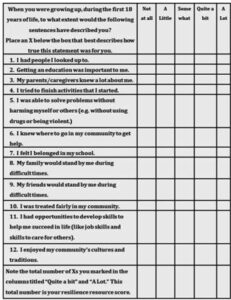
The National Health Service of Wales in 2018 conducted a major study of family and community conditions in that country to assess the extent to which resilience resources available to youth offset the long-term risks for youth with high ACEs scores. They asked adults to complete retrospectively the Child and Youth Resilience Measure (CYR-M) and compared scores with participants’ health data. This post describes their findings and gives you the opportunity to complete the survey for your own childhood experience. You can use the link to the PDF workbook below to complete this exercise and all others in this series of posts.
My name is Lane Lasater, a retired clinical psychologist. In gratitude for the life I have been given, I am sharing everything I learned during my career and personal life here on my website http://www.LaneLasater.com and on my YouTube Channel Life Roadmaps from a Retired Psychologist https://www.youtube.com/@lane205 Each post contains my written material, an AI generated graphic, a 15-17 minute audio summary, and a 5-7 minute video summarizing the material. A printable and fillable PDF “Exercises to Support Recovery from Family Trauma Syndrome” with each exercise I describe in my videos can be downloaded here: Transcending Family Trauma Workbook
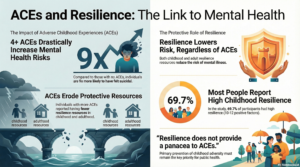
The audio below introduces the importance of Resilience Resources for Youth as determined by a Welsh study.
Recovery Exercise #2: Complete the Child and Youth Resilience Questionnaire.
Complete that questionnaire in the Exercises to Support Recovery from Family Trauma Syndrome download here https://www.lanelasater.com/wp-content/uploads/2025/12/TFT-Fillable-Recovery-Workbook.pdf to assess resilience resources available to you as a child that may have helped you offset effects of ACEs and family traumatic experiences.
Resilience Resources Findings of the Welsh Study
The researchers grouped participants into three levels of childhood resilience. (a) Low childhood resilience <6 positive items (10.9% of participants); (b) Moderate childhood resilience 6-9 positive items (19.4% of participants); and (c) High childhood resilience 10-12 positive items (69.7% of participants). The authors found that resilience resources did somewhat lower the risks of mental illness both in those who report ACEs and those who do not.
In multivariate analyses (including socio-demographics, ACE count and childhood resilience category), higher ACE count remained strongly associated with increased risk of all mental illness categories, and higher childhood resilience with reduced risk (p<0.001).
Individuals who suffered ACEs were at significantly increased risk of mental illness, with risks of all outcomes increasing with the number of ACEs reported. Compared with people with no ACEs, those reporting four or more were over three times more likely to report current mental illness, six times more likely to report lifetime mental illness and nine times more likely to report having ever felt suicidal or self-harmed.
Individuals who suffered ACEs had fewer resilience resources, with markers of both childhood and adulthood resilience reducing as ACE counts increased (see Sections 4 and 5). Thus, those with four or more ACEs had the lowest exposure to individual, relationship and community factors that may build resilience.
Both childhood and adult resilience resources showed protective relationships with mental illness independent of ACEs. Thus, resilience resources may lower the risks of mental illness both in those who report ACEs and those who do not. However, resilience does not provide a panacea to ACEs, and primary prevention of ACEs must remain a key priority.
Your Resilience Resources Score
Your score on this scale helps you take stock of the resources that were available to you. Also note the resources that you didn’t have and try to make those a priority for you during recovery. The higher your resilience resources score, the better.
My resilience resources score was seven, which they classify as moderate as you saw above. My parents tried very hard to do their best for us but couldn’t overcome their conflicts because the professionals they sought help from didn’t understand alcoholism and family dynamics and weren’t able to help. Further, because we lived in a rural area, I had minimal contact with other families and community resources. I did okay in school, which helped me get by even though my emotional problems prevented me from retaining what I learned until much later when I discovered psychology and pursued a field that deeply interested me.