
My Journey to Recovery by Lane Lasater
November 27, 2025
My Story
To help you understand how I came to specialize in helping people overcome family trauma during my career as a Clinical Psychologist, I want to share with you my personal journey to recovery from childhood family trauma and alcoholism. My personal experiences allowed me to bring first-hand knowledge about the challenges and rewards of lifelong recovery to all my work with other people facing these difficulties. Most importantly, it allowed me to carry the following message of Hope:
“No matter what trauma and other life challenges you face or have faced, you can make things better for yourself and those around you!”
My name is Lane Lasater, a retired clinical psychologist. In gratitude for the life I have been given, I am sharing everything I learned during my career and personal life here on my website http://www.LaneLasater.com and on my YouTube Channel Life Roadmaps from a Retired Psychologist https://www.youtube.com/@lane205 Each post contains my written material, an AI generated graphic, a 15-17 minute audio summary, and a 5-7 minute video summarizing the material. A printable and fillable PDF “Exercises to Support Recovery from Family Trauma Syndrome” with each exercise I describe in my videos can be downloaded here: Transcending Family Trauma Workbook
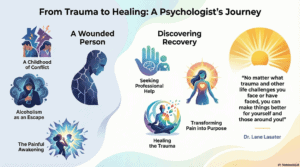
A Wounded Person
I grew up in rural Colorado, where my parents were cattle ranchers. My childhood family was a powerful blend of my parents who were very caring but also quite wounded, terrible family conflict, wonderful animals and natural beauty, loneliness, joy, and deep hurt. I realized much later that I became a helper as a little boy as I tried to stop my parent’s terrible arguments.
When I couldn’t make things better, I became angry and rebelled, and our bitter fights tried them greatly. I also turned my anger against myself. By the time I reached drinking age, I was lonely, depressed and alienated and hated myself without really understanding why. I blacked out the first time I drank beer at age 18, and many times thereafter, and for fourteen years, I worked hard to keep my drinking separate from my work and studies.
Discovering My Calling
Fortuitously, after college, I worked for two years in a psychiatric hospital as an attendant where I discovered and fell in love with the world of psychology, which was entirely new to me. This powerful experience led to the decision to become a clinical psychologist, and for the next eight years I worked in hospitals, prisons, and community mental health centers while I completed my professional training at the University of Colorado. My clinical psychology internship at the University of Minnesota Health Sciences Center in Minneapolis was the next step toward fulfilling this dream.
Throughout my professional work and training, I discovered how fascinating it was to understand each stage of people’s lives. I observed how each person’s development was shaped throughout his or her unique circumstances. It thrilled me to be in this field. The last clinical rotation of my internship was working at a community mental health center in central Minnesota. A few weeks later I would start a one-year fellowship in child, adolescent, and family psychology in Minneapolis. Then, when I finished my doctoral dissertation, my graduate training would be complete. I respected this group of mental health professionals who worked with troubled families coping with alcoholism, child abuse, and violence. During my summer at their clinic, they modeled how to be genuine and loving with the people they served. Their personal wisdom, developed from broad life experiences, gave them deep compassion for people and families in pain. I wanted to be that kind of helper.
A Painful Awakening
Before we finished our time at the mental health center, the staff held a goodbye party for me and my fellow psychology intern. After volleyball and a cookout, we sat drinking wine and talking, enjoying the cool summer evening. I kept drinking wine as the evening went on. We talked about our families, and trying to be funny, I talked about a time at age eleven when I tried unsuccessfully to stop my parents’ violent argument. I laughed about my ineffectiveness as a family therapist. My friends greeted my story with silence. I instantly regretted opening my mouth because I’d revealed my troubled family background, and that I was emotionally unfinished with the past.
For a long time, I’d kept secret my shame about my troubled childhood because I feared it made me emotionally unworthy to become a psychologist. Until that moment, I’d considered my professional training almost complete. Over the next few months, it became apparent that the last and most important dimension of my preparation as a helper was only starting. I had to make peace with my troubled childhood experiences.
During the weeks after the party, I struggled to come to terms with my feelings about the past. I recognized I needed professional help and asked my clinical supervisor at the University to recommend a therapist. She recommended clinical social worker Merle Fossum (Facing Shame: Families in Recovery) in Saint Paul.
Discovering Recovery
At our first meeting, Merle asked me many questions about my family life growing up. He was also interested in my drinking. During the second session, Merle told me he thought I was in trouble with alcohol, and recommended that I stop drinking. Even though I knew he was right, my heart sank. Drinking gave me breaks from life and seemed to help me cope with my emotions and relationships. With Merle’s help, I realized I’d been an alcoholic from my earliest drinking experiences. I thought the purpose of drinking was to get drunk. I’d struggled for years to drink in a controlled way. Now the secret was out.
I haven’t had a drink since that day. Merle introduced me to people who showed how to create a fulfilling life without drinking. As I removed the anesthetic of alcohol, my emotions awakened. I didn’t realize it then, but I had miles to go in recovery. After I’d stopped drinking for a few months, Merle recommended I complete an outpatient treatment program for alcoholics and their families. He told me I needed to face my traumatic childhood experiences so I could maintain recovery. The powerful treatment program I entered in Minneapolis, developed by Dr. Patrick Carnes (A Gentle Path through the Twelve Steps), helped me heal the anger, hurt, and shame from childhood.
Deeper Healing
An important milestone in recovery came after I’d stopped drinking for several years. I heard Dr. Claudia Black speak in Colorado Springs about adult children of from alcoholic families (It Will Never Happen to Me: Children of Alcoholics as Youngsters—Adolescents—Adults). Dr. Black’s moving talk touched me profoundly, and initially I felt shattered as a flood of grief came over me. Many painful memories returned, and I recognized how deeply traumatic some family experiences were for my siblings and me. My grieving continued for months, but finally a lightness and peace I’d never felt before gradually came over me.
As my sadness about my family ebbed, I felt great compassion for my wounded parents, who did everything they could to give us a good start in life. I recognized that what happened in my family resulted from several generations of unfinished emotional business and troubled family patterns. Even though my parents sought help, the professionals they saw didn’t have the information and resources to intervene in this destructive family cycle. I deeply regret my parent’s suffering, but treasure the wisdom and kindness they shared with me and my siblings, which benefits me every day.
Grateful for the Life I’ve Been Given
Amid the conflict, hurt and trauma in my family, there were many resources as well. The entire family worked together each summer. My father taught my brothers, my sister, and me how to ride horses and raise and care for our animals and to respect nature and the environment. My mother loved people and showed great kindness to everyone she met. She showed me how to take care of others, and this inspired me in my work as a psychologist. My parents believed in education and helped with mine. Their values uplifted me through the years as I worked to help other people make the best of their lives.
In recovery, I had to give up trying to change the organizations where I worked, and stop expecting my family members to change. I had to stop smoking cigarettes, stop my sugar addiction and compulsive achieving, and learn to care for my health. The negative events in my life ceased to dominate me emotionally. I learned to appreciate my life as it was, realizing I became a more compassionate and helpful person because I understand recovery struggles firsthand. Through my recovery and professional experience, and the kindness and support of so many people, I now understand how to transform troubled behavior and emotional patterns into strength and wisdom. Through this book I share my knowledge about wounded children and families, self-help resources, and therapy, bodywork and meditation tools that have all been part of my process to support you on your recovery journey.
Key takeaways from this chapter
- During recovery, I’ve learned to solve my problems one at a time, taking on the most pressing issues first.
- Alcohol was my primary escape, but I had to stop cigarettes, and sugar, wheat, flour, and high-fat foods as well.
- Self-help group support, addiction treatment, trauma therapy, bodywork and meditation are resources for many people during recovery.
- Numbed or frozen feelings slowly un-thaw during recovery, and it can take several years to process these emotions and come to peace with the past.
- You have the ultimate power to change your life using compassionate language for yourself and the wealth of resources available.