
Guideline #3: Carry Out Best Parenting Practices from Long-Term Studies
February 10, 2026
The British “Study of Health and Development” was begun in 1946, when British scientists recorded the birth of almost all children born in the British Isles, then tracked the life progression of each of those children throughout their lives.
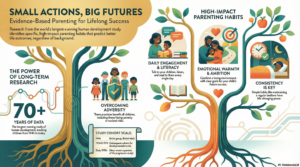
The study was repeated with children born in 1958, 1970 and the early 1990s, becoming the longest running study of human development ever conducted. https://closer.ac.uk/study/mrc-national-survey-health-development/
By probing this huge amount of data, Helen Pearson identified both public health innovations and certain parenting practices correlated with good life outcomes. She describes her conclusions from this long-term study in her book The Life Project https://cls.ucl.ac.uk/the-life-project-helen-pearsons-history-of-the-uks-birth-cohort-studies/
Also, in her Ted Talk “Lessons from the longest study of human development” https://www.ted.com/speakers/helen_pearson
Pearson reports that study data suggests the following early childhood parenting practices are associated with better life outcomes, including for those children who are at risk through poverty, racism, or other family and societal factors.
- “Talking to and listening to your children
- Making clear you have ambitions for their future
- Being emotionally warm
- Teaching them letters and numbers
- Taking them on excursions
- Reading to them daily and encouraging them to read for pleasure
- Maintaining a regular bedtime”
Most modern parents automatically incorporate these parenting practices into their family life, but the British results and Pearson’s insights provide a valuable reminder of the potential life changing power of these specific parenting actions that we can all implement readily.