Are Childhood Wounds Holding You Back?
November 27, 2025
Are you still suffering from childhood traumatic events? The goal of this website is to guide you step-by-step as you move beyond the harmful experiences you faced and overcome their powerful and enduring effects in your adult life. I’ve walked every step of this path as I healed from my troubled childhood and found my way to wholeness. Growing up in troubled families, we didn’t have the information, support, and resources to comprehend or escape what was happening, and this powerlessness magnified the destructive impact of sometimes catastrophic family events. In later posts I describe how wounded parents and family systems get off track, how traumatic childhood family events continue to harm us, and how to chart your path to self-understanding, well-being, and fulfillment.
My name is Lane Lasater. In gratitude for all I have received during my life and career, I want to share with you everything I have learned here on my website http://www.LaneLasater.com and on my YouTube Channel https://www.youtube.com/@lane205 This post gives you an overview of how our childhood trauma and survival strategies continue into our adult life.
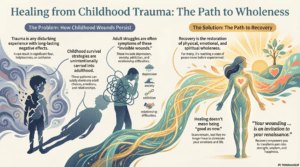
“Your wounding, the breaching of your soul, is an invitation to your renaissance.”
Jean Huston
As adults, we unintentionally bring with us the desperate strategies we developed as children to survive in our troubled families, and these behaviors often subtly dominate our adult choices. As a result, we walk through our lives carrying invisible wounds, trapped in behavior choices and emotional patterns we feel unable to change. Many of us don’t respect ourselves, struggle with depression, anxiety, or anger, and feel lost trying to create healthy relationships and meet adult tasks and challenges. Surrounded by potential addictions, we may turn to alcohol, drugs, cigarettes, food, gambling, sexual affairs, or other escapes to soften the edge of suffering.
Why do so many families offer some life necessities but fail at providing the emotional support, safety and stability children need? Multi-generational transmission of trauma and chaos happens when parents, still struggling with their own childhood wounds, create families, and unwittingly bring with them their ineffective coping patterns, unfinished emotional business, and addictions, and plant these painful seeds in their children. Through major advances in understanding family systems, the multiple consequences of traumatic experiences, child development, and the dynamics of addictions, we now understand the dangerous and enduring impact troubled family systems can have for those of us who grew up in such environments. Thankfully, the transformative information and resources of recovery can empower us to transform our often desperate childhood survival behavior into freedom and serenity.
Recovery means restoring ourselves to physical, emotional, and spiritual wholeness, or for many of us, reaching a state of health, peace, and life satisfaction we’ve never experienced or thought possible.
Recovery doesn’t mean good as new. We always carry the scars and memories of past painful and negative experiences, but with healing information and support, these adverse events no longer must dominate our emotions and relationships. We can develop ways of living that meet our deepest needs, respect our limitations and vulnerabilities, and open our hearts to love, happiness and gratitude. The gift of recovery from my traumatic family experiences is the foundation for everything I treasure in life. Recovery principles guide my relationship with my life partner and inspire our family goals. My life’s work as a clinical psychologist has focused on supporting other people wounded in their troubled families. My aim in this book is to offer you a complete guide to recovery, and to help you connect you with information and resources that enable you to transform your childhood wounds into strength and wisdom.
The Impact of Family Trauma
The American Psychological Association defines trauma as:
“Any disturbing experience that results in significant fear, helplessness, dissociation, confusion, or other disruptive feelings intense enough to have a long-lasting negative effect on a person’s attitudes, behavior, and other aspects of functioning.”
Traumatic experiences we faced as children often overwhelmed our ability to cope with and integrate the powerful emotions that resulted. Such experiences impact our neurological, social, emotional and relationship development. As you know, the adverse events we faced in troubled families often go far beyond what happens in less challenged families. These adverse childhood experiences can devastate us, and may include witnessing family violence, being physically and/or sexually abused by adults, facing abandonment or betrayal, harsh and repeated criticism, a parent who favored another sibling or who couldn’t acknowledge your worth, or losing a parent to addiction, divorce, or death. You may feel intense sadness or resentment when you think about your family experiences, or you may feel numb and dead inside.
Whether a specific negative experience is traumatic or deeply painful for you depends on your perspective. Your brother or sister may have shrugged off a certain event, but you felt devastated, yet another experience may have deeply disturbed them, but not you. As we recover, we gradually understand and share our challenging childhood experiences with safe people, recognize and integrate the powerful emotions that remain, and move forward, no longer oppressed by these memories. Each of us received a unique set of strengths and limitations during childhood. The resources we received in our families and communities helped offset the limitations and catastrophes we may have faced, but many of us still weren’t fully prepared for adulthood. Our skill deficits, survival behavior strategies and emotional defenses lead us directly into adult relationship problems, challenging emotions, faulty coping strategies and addictions. These complex adult emotional and behavioral challenges represent an accumulation of choices we made one by one, choices that seemed right at the time but didn’t work out the way we hoped. Recovery gives us access to the information and support to face these challenges, empowered with the complete set of resources and skills we need.